Reflexology
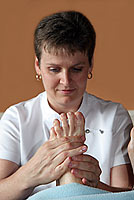 This is a gentle but firm massage through the fingers to the reflex points in either
the feet or hands, which has a stimulating effect on specific parts of the
body. All reflexes are connected to the organs, glands and systems within
the body. Reflexology is a completely safe form of treatment, which is
non-invasive and can be applied to people of all ages. Some conditions that
respond to treatment are stress related illnesses; insomnia; IBS,
respiratory, sinus congestions and many more.
This is a gentle but firm massage through the fingers to the reflex points in either
the feet or hands, which has a stimulating effect on specific parts of the
body. All reflexes are connected to the organs, glands and systems within
the body. Reflexology is a completely safe form of treatment, which is
non-invasive and can be applied to people of all ages. Some conditions that
respond to treatment are stress related illnesses; insomnia; IBS,
respiratory, sinus congestions and many more.
The aim of Reflexology is to correct three negative factors involved in the disease process namely congestion, inflammation and tension. Reflexology is intended to improve the body's circulation and assist the body in the elimination of waste products, so that the toxins do not have a chance to build up to harmful levels in the liver, kidneys or bowel. Reflexology can help control the perception of pain by stimulating the release of endorphins - the natural painkillers - from the pituitary gland in the brain into the bloodstream. Reflexology is applied as a whole and not applied for specific areas or conditions. We want the natural healing process to occur speedily and efficiently.
The history of reflexology can be traced back over 4000 years. References,
illustrations and artefacts show the early Chinese, Indians, Egyptians and
Japanese all worked on the feet to promote good health.
Modern day reflexology stems from work carried out in the early part of this
century by Dr William Fitzgerald. In 1917 he, with colleague Dr Edwin
Bowers, published 'Zone Therapy' that put forward the theory that the body
had ten zones that are energetically connected, so that parts of the body
can be influenced by energy flow from another part of the body in the same
zone. This work was developed further by Eunice Ingham who formulated the
relationship of the feet to the different zones in the body. She researched
the effects that working on the feet would have on other parts of the body.
The advantage of having a reflexology session in the workplace is that it requires minimal undressing and it only requires access to the feet.